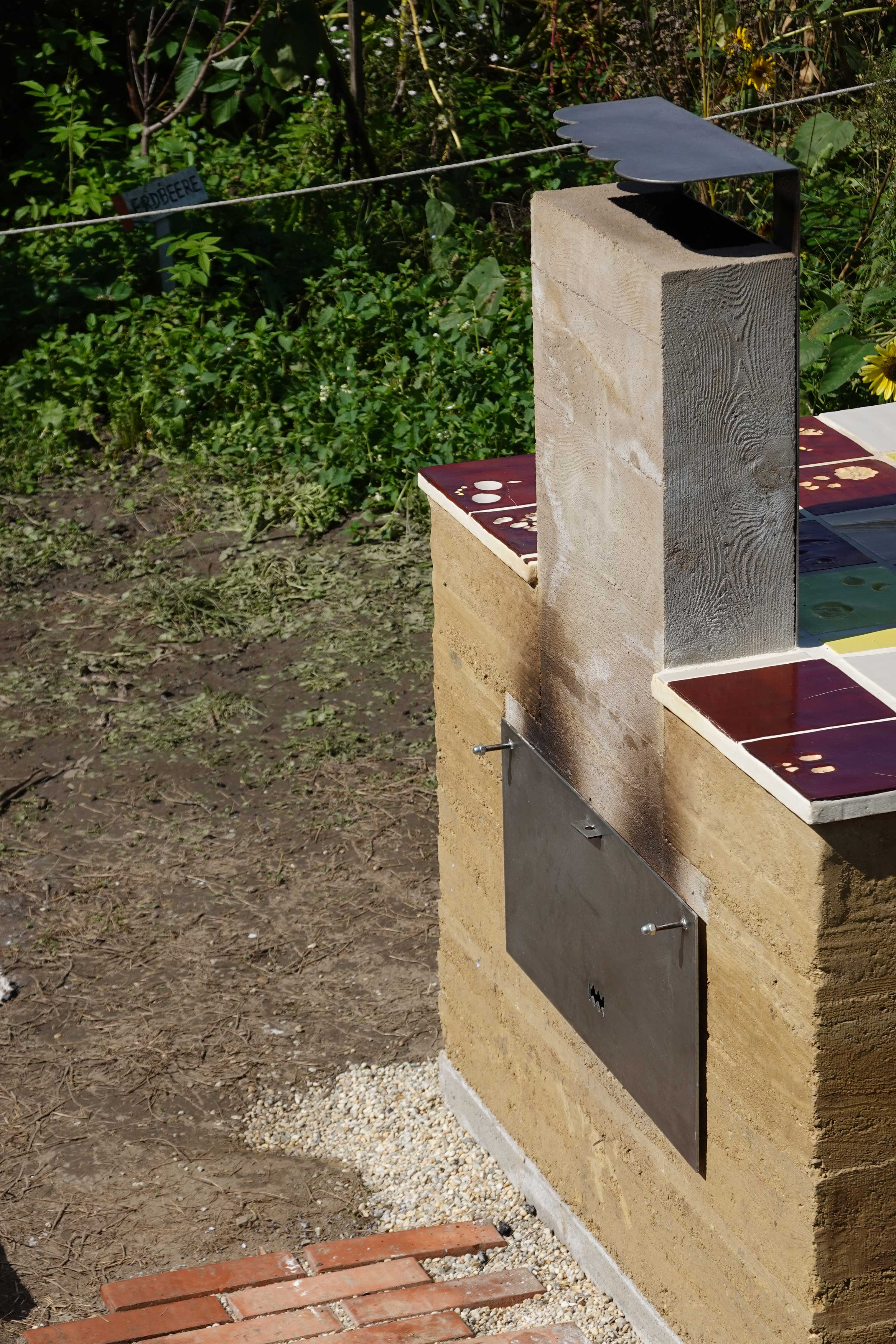
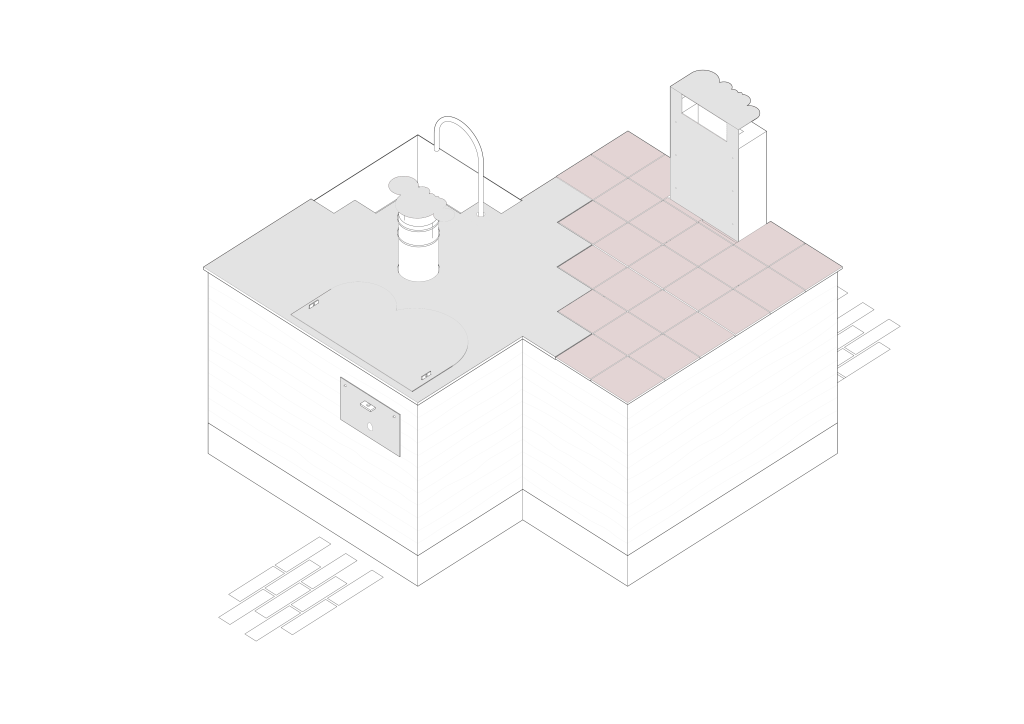
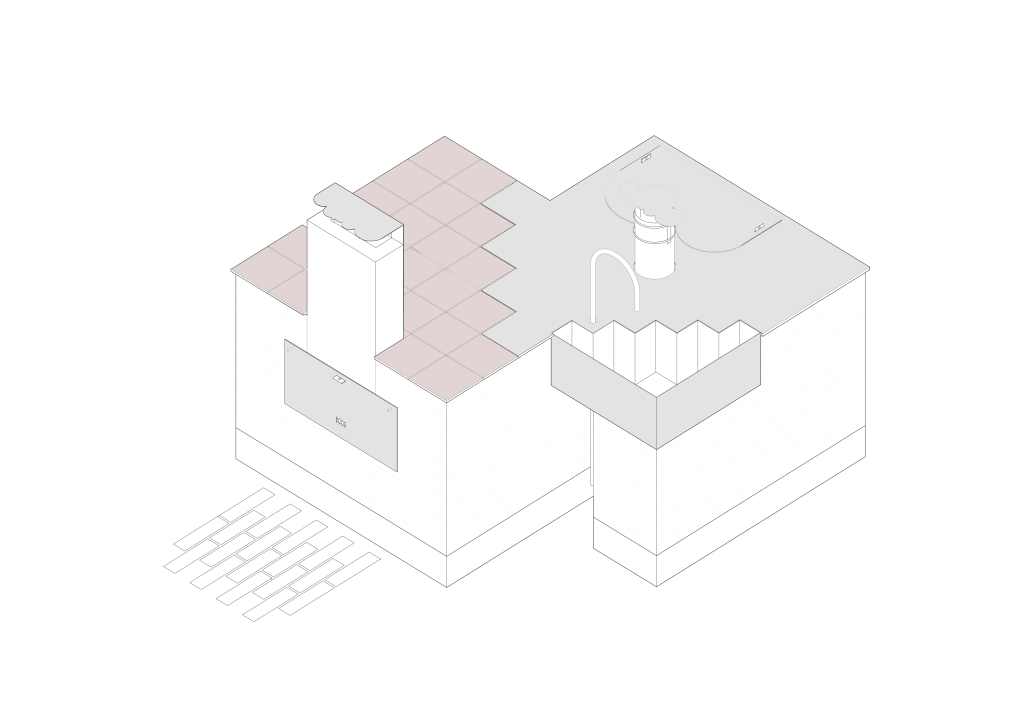
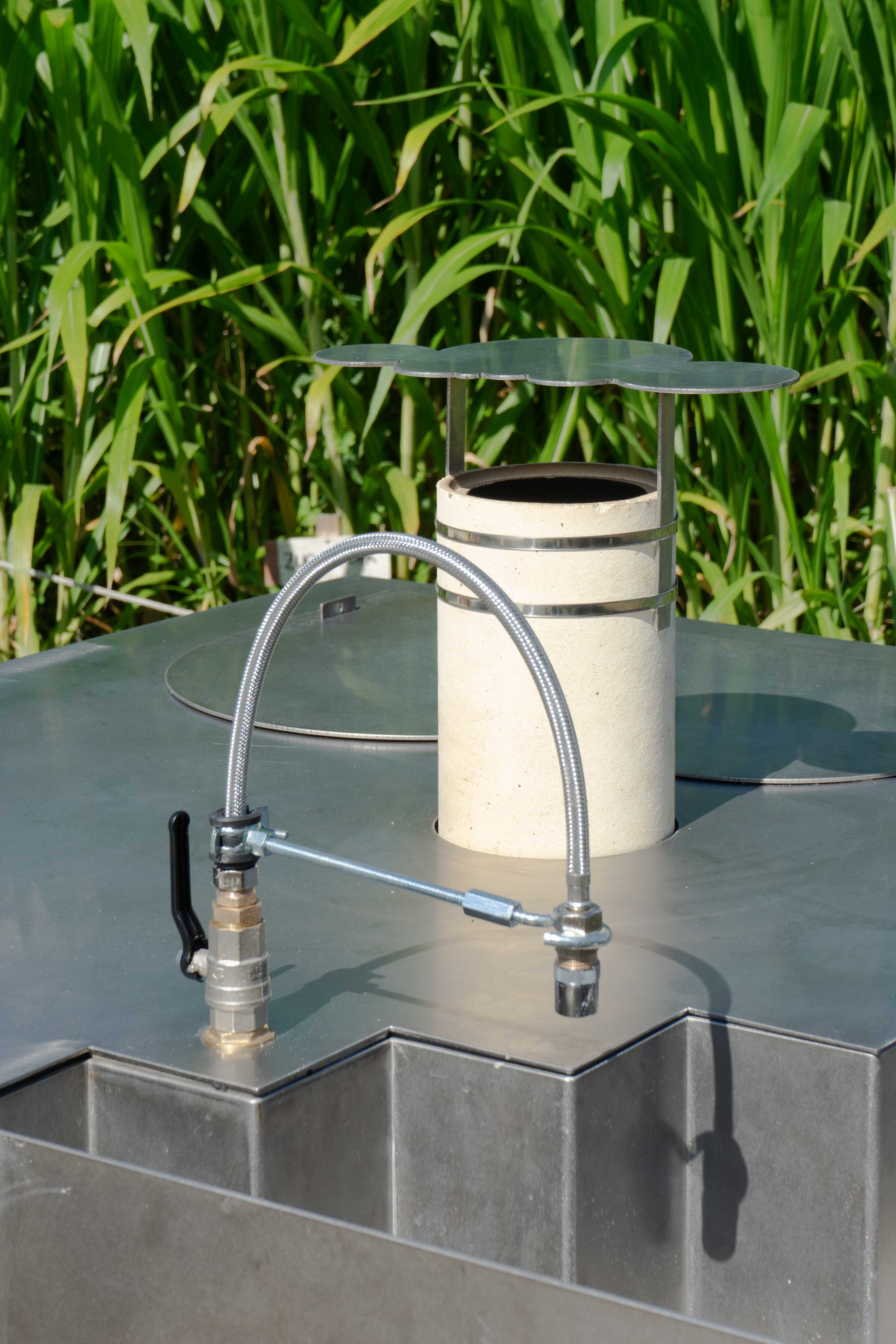
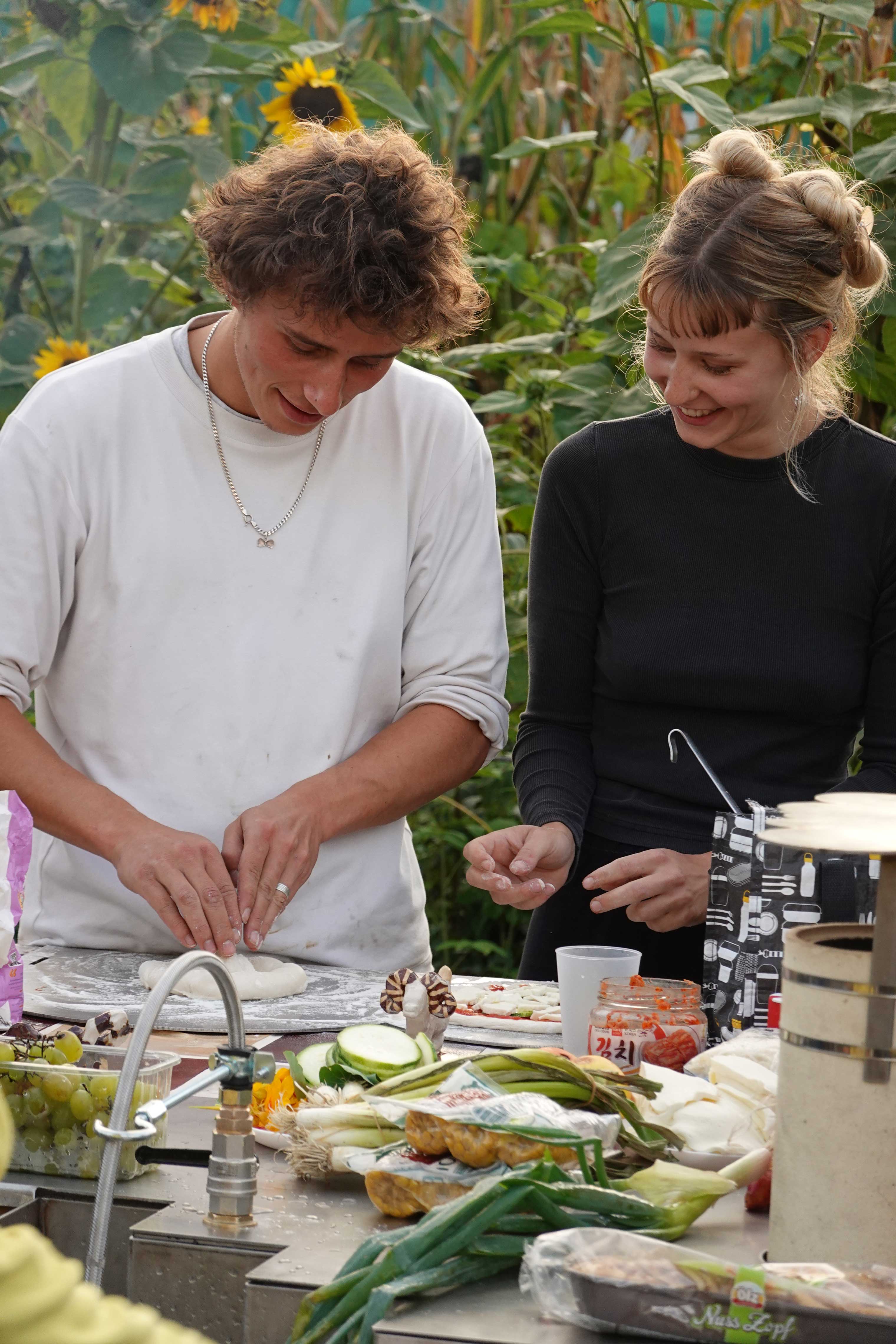
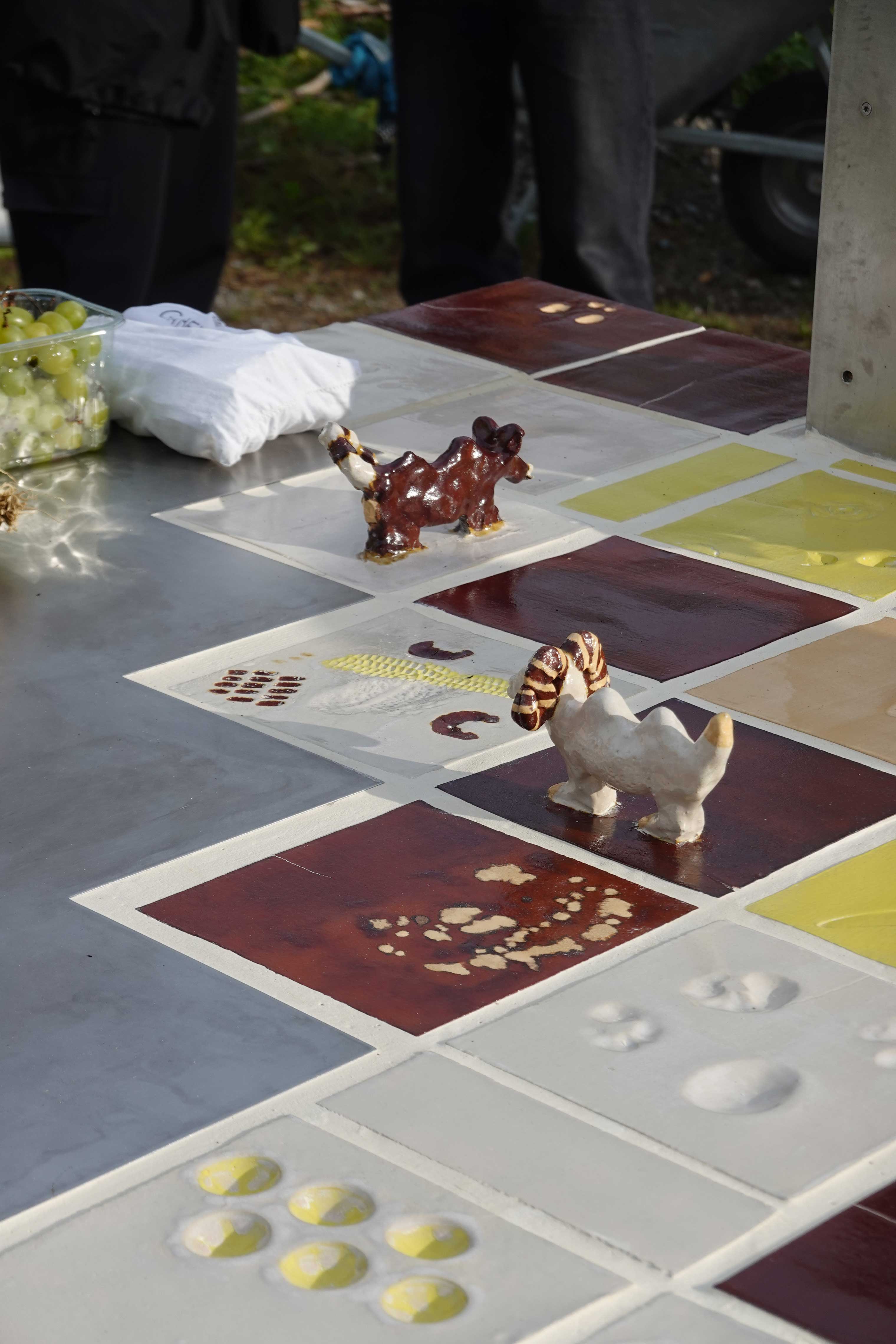
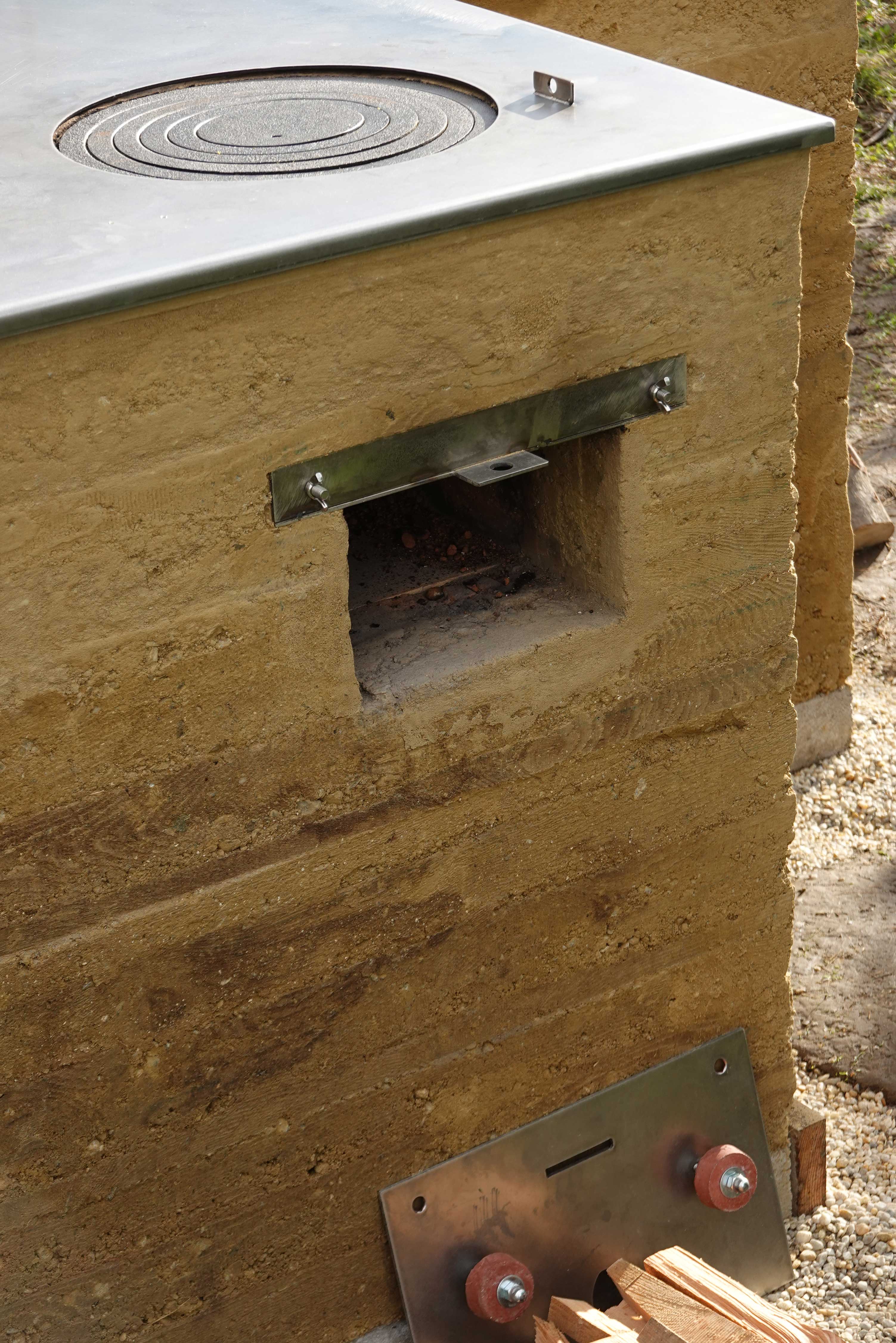
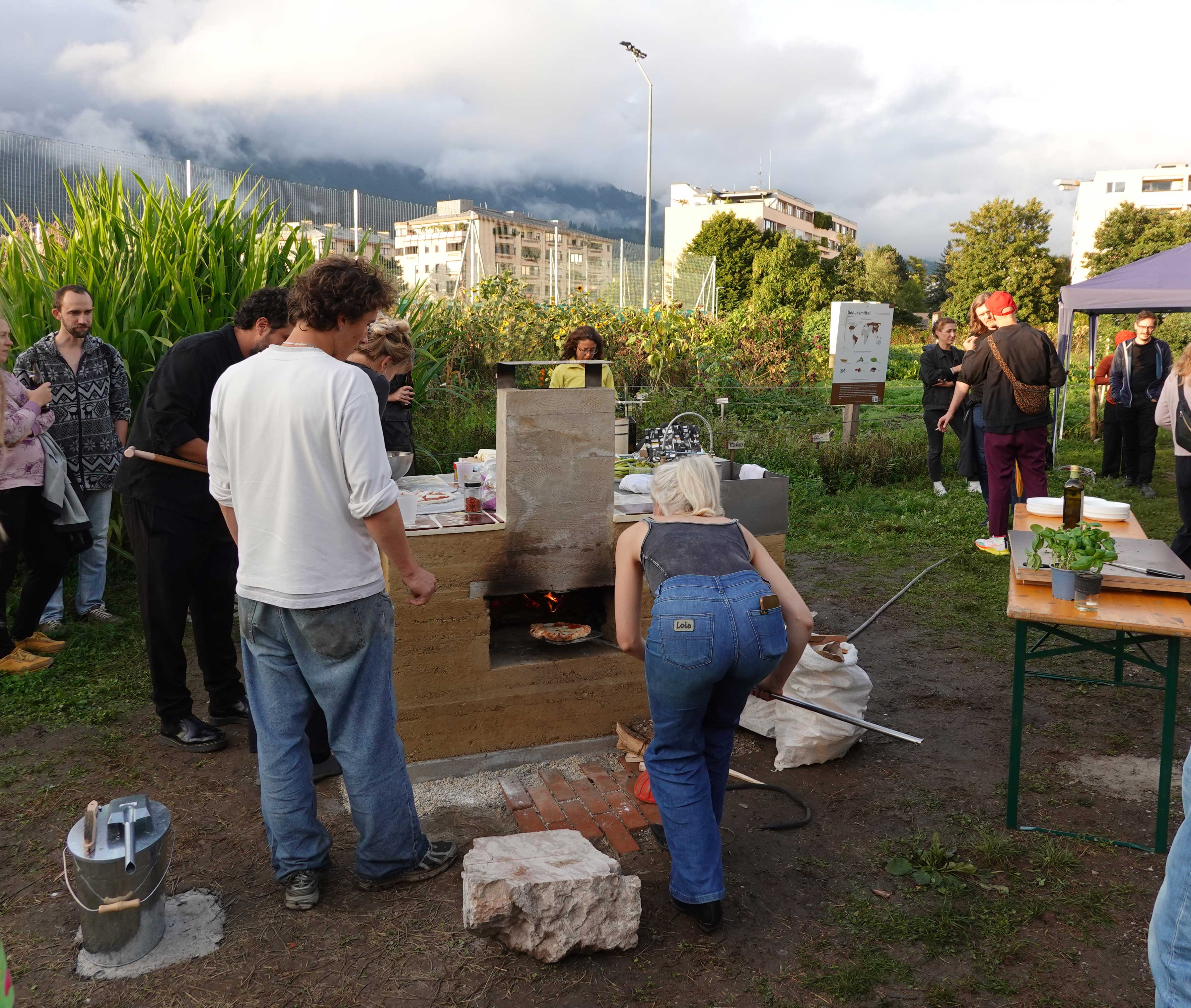
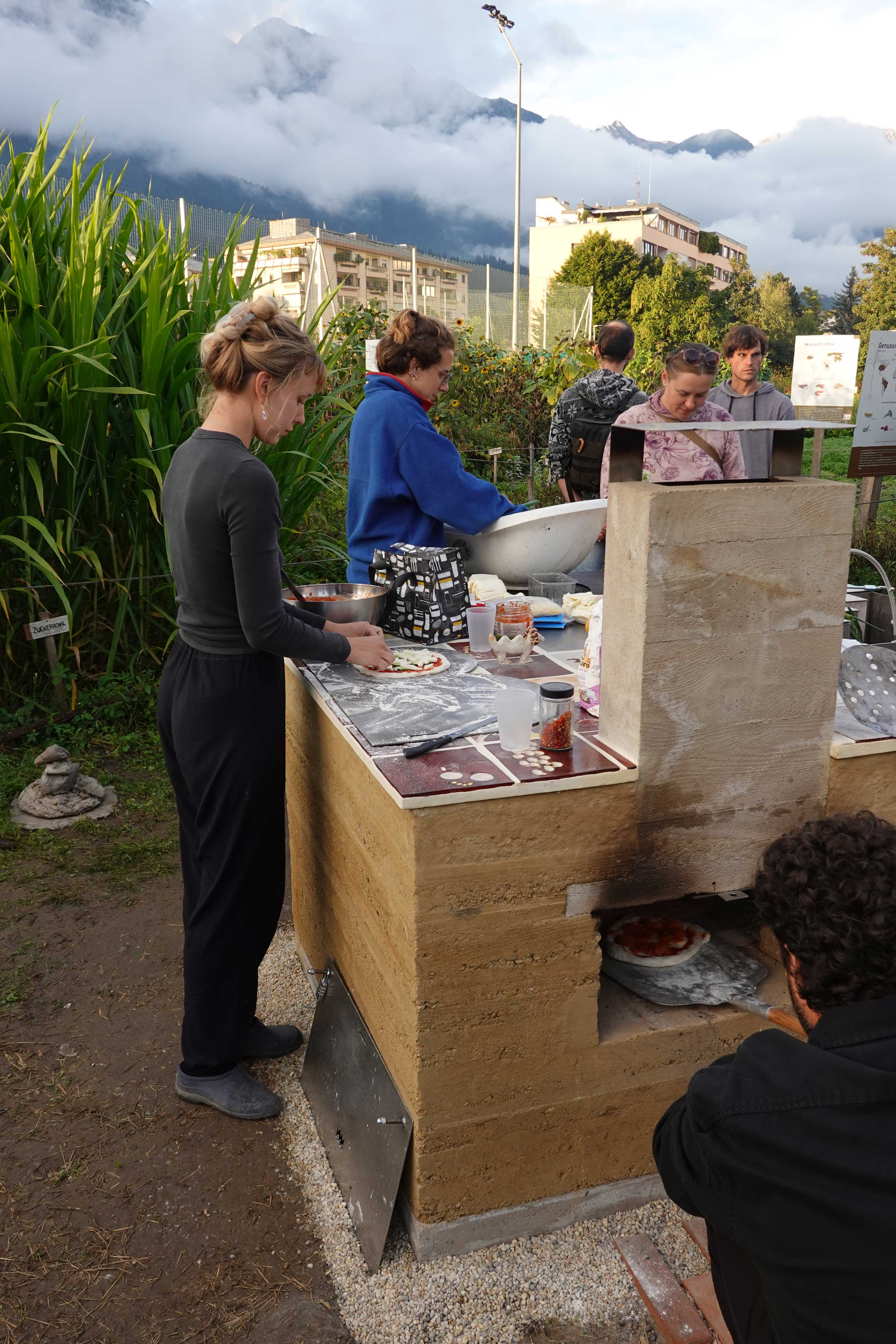
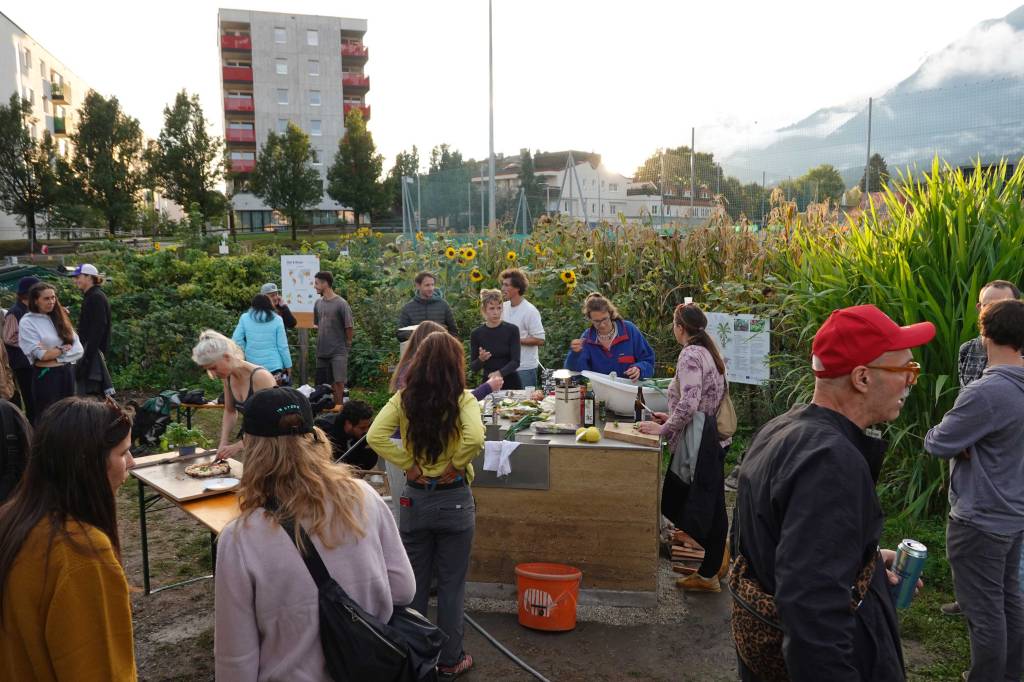
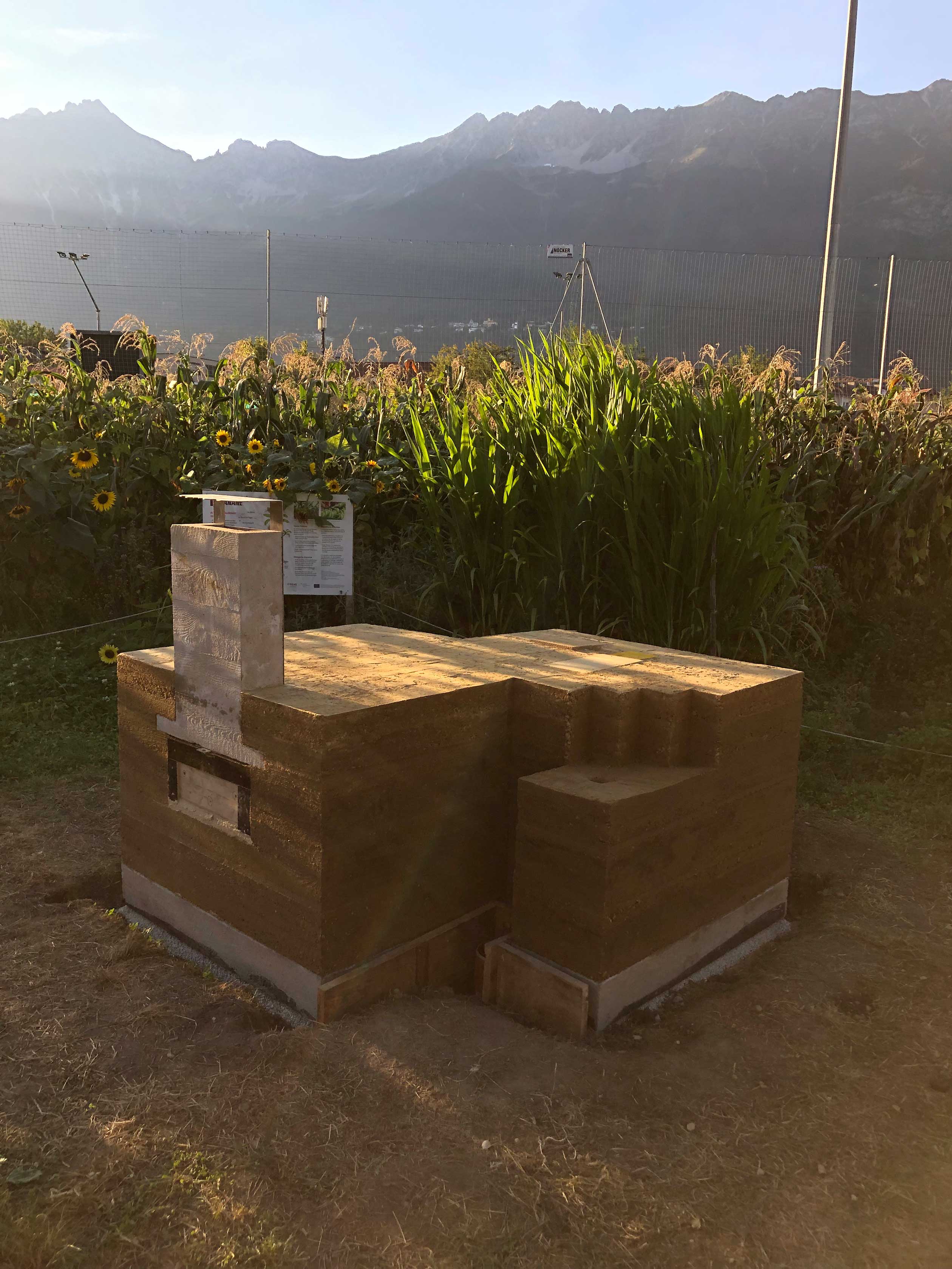
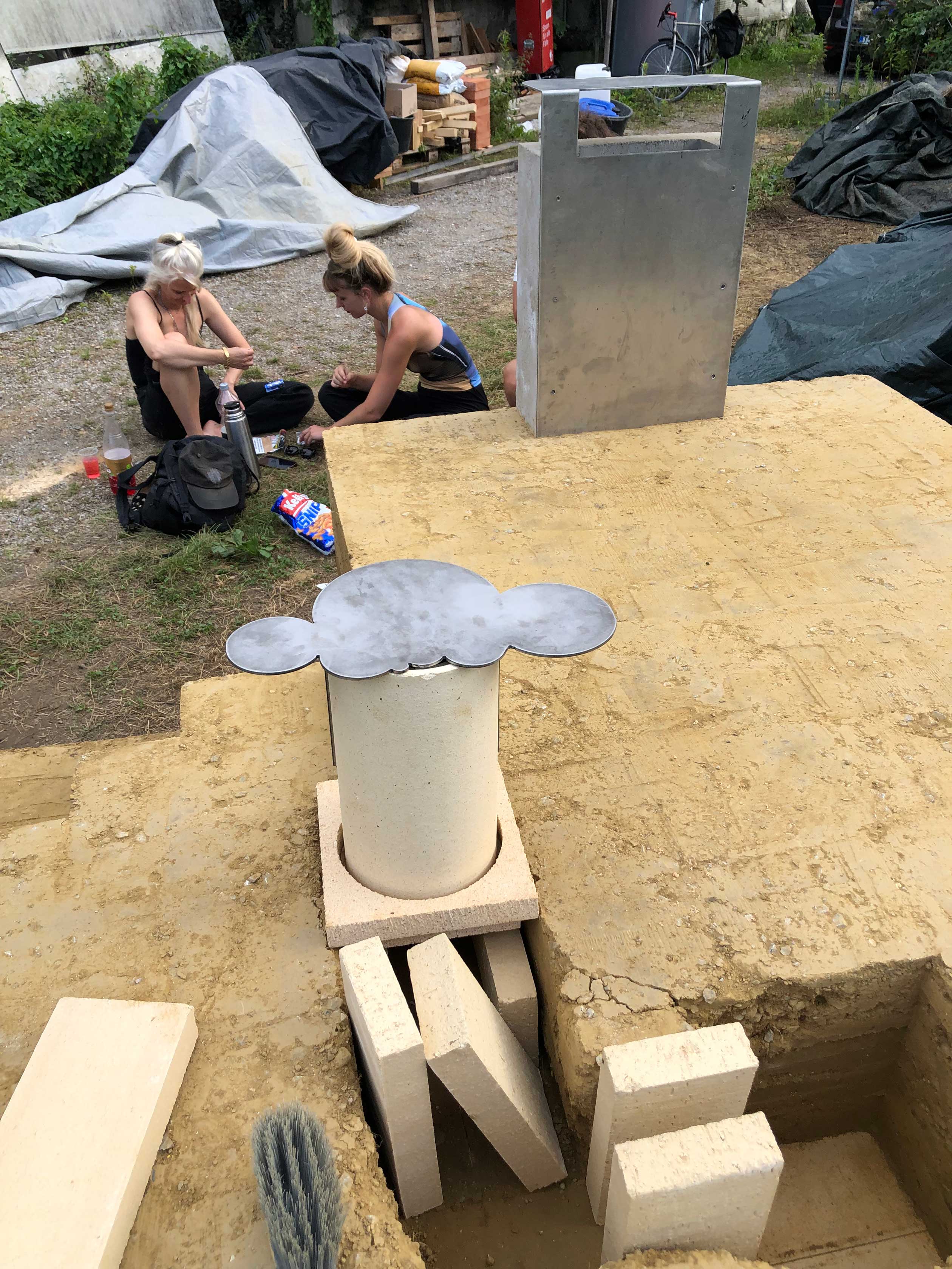
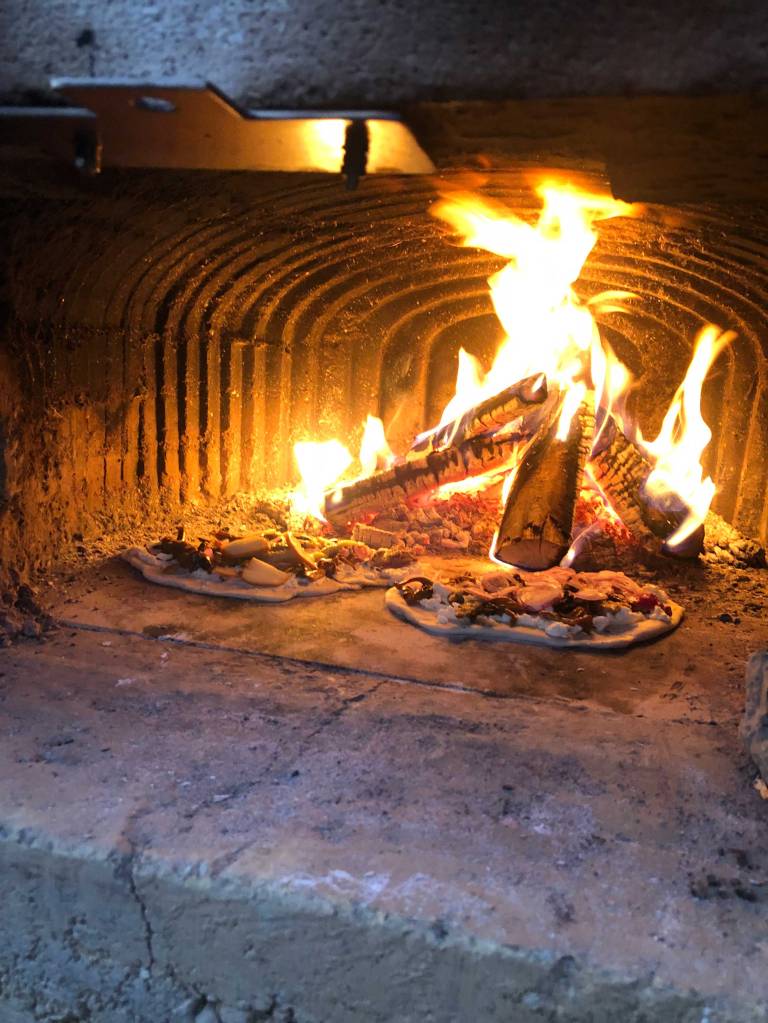
ÖKÜ is a public kitchen unit at the Weltacker of feld:schafft in Innsbruck. It provides robust infrastructure for washing and cooking – equipped with a pizza oven, cooking area, and water connection – and was built from rammed earth. But ÖKÜ is more than just a kitchen: here, cooking and eating are understood as social events that strengthen community and foster exchange between different groups. As a place for collective cooking, eating, and encounters, it serves as a prototype for a solidaristic urban society, making care and provisioning work visible in public space. From October 2025 onwards, ÖKÜ will be available to the public after registration and introduction. If you are interested in using it, please contact us at: bildung@feldschafft.at
As part of the Margarete Schütte-Lihotzky Project Fellowship 2024, the idea was developed to reinterpret Schütte-Lihotzky’s historical scullery as a communal space in the public realm. The project explored cooking as a social and cultural practice and aimed to create a setting that supports exchange, participation, and inclusion. The outcome was a prototype – the Public Kitchen Unit (ÖKÜ) – designed as a socially and ecologically sustainable space. The design followed low-tech principles, emphasizing simple, low-maintenance construction methods that allow for collective use and adaptation.
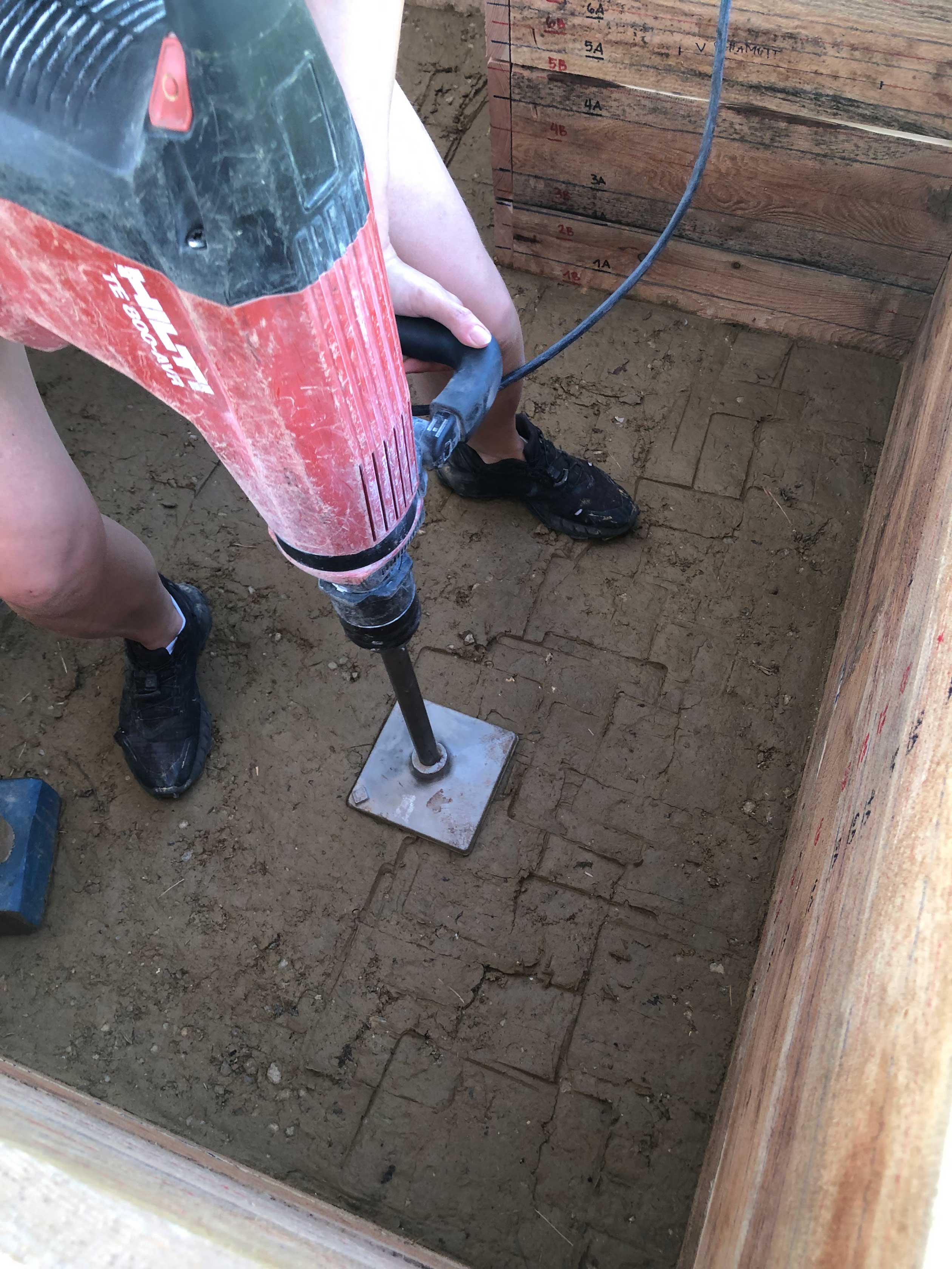
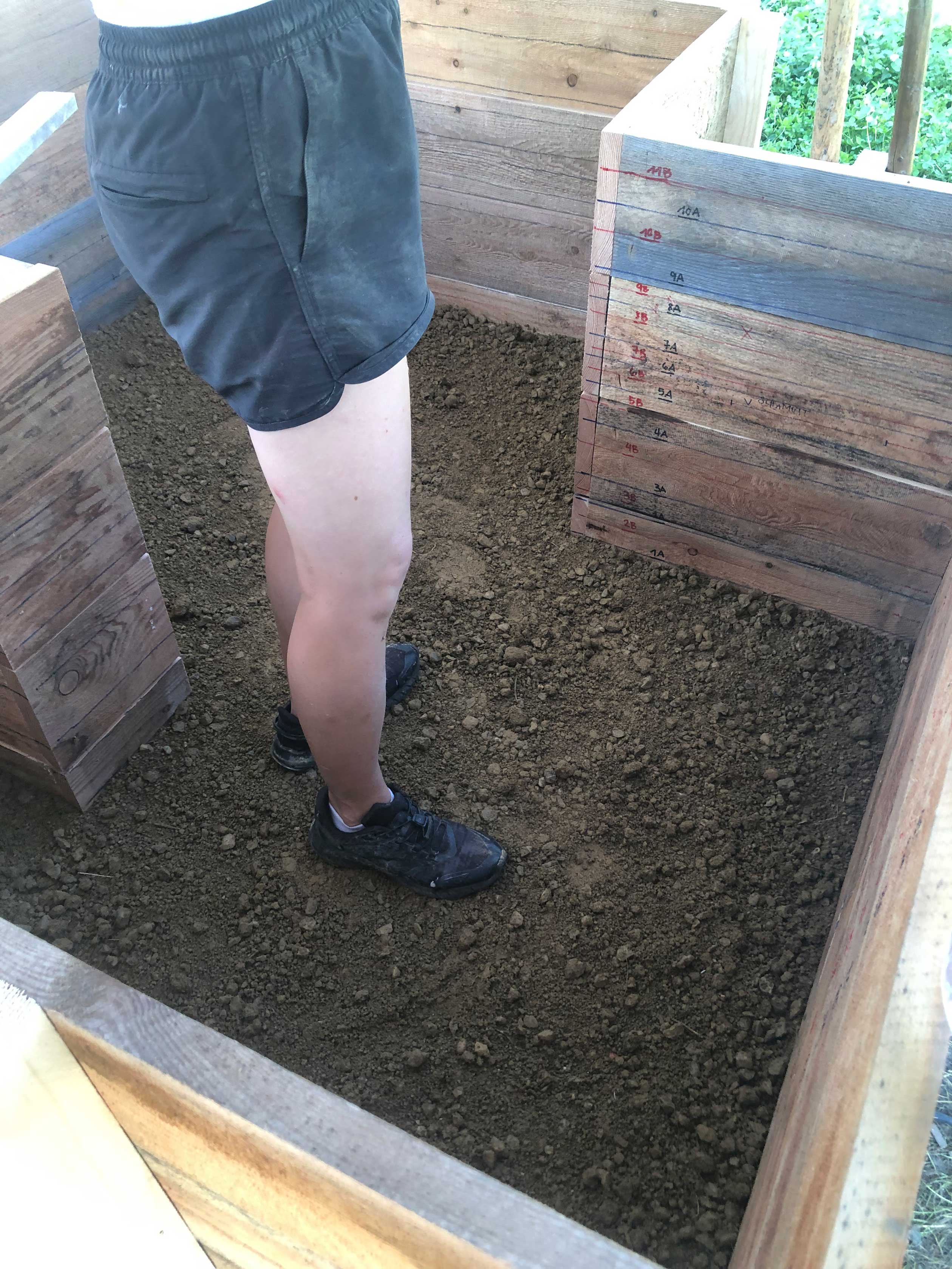
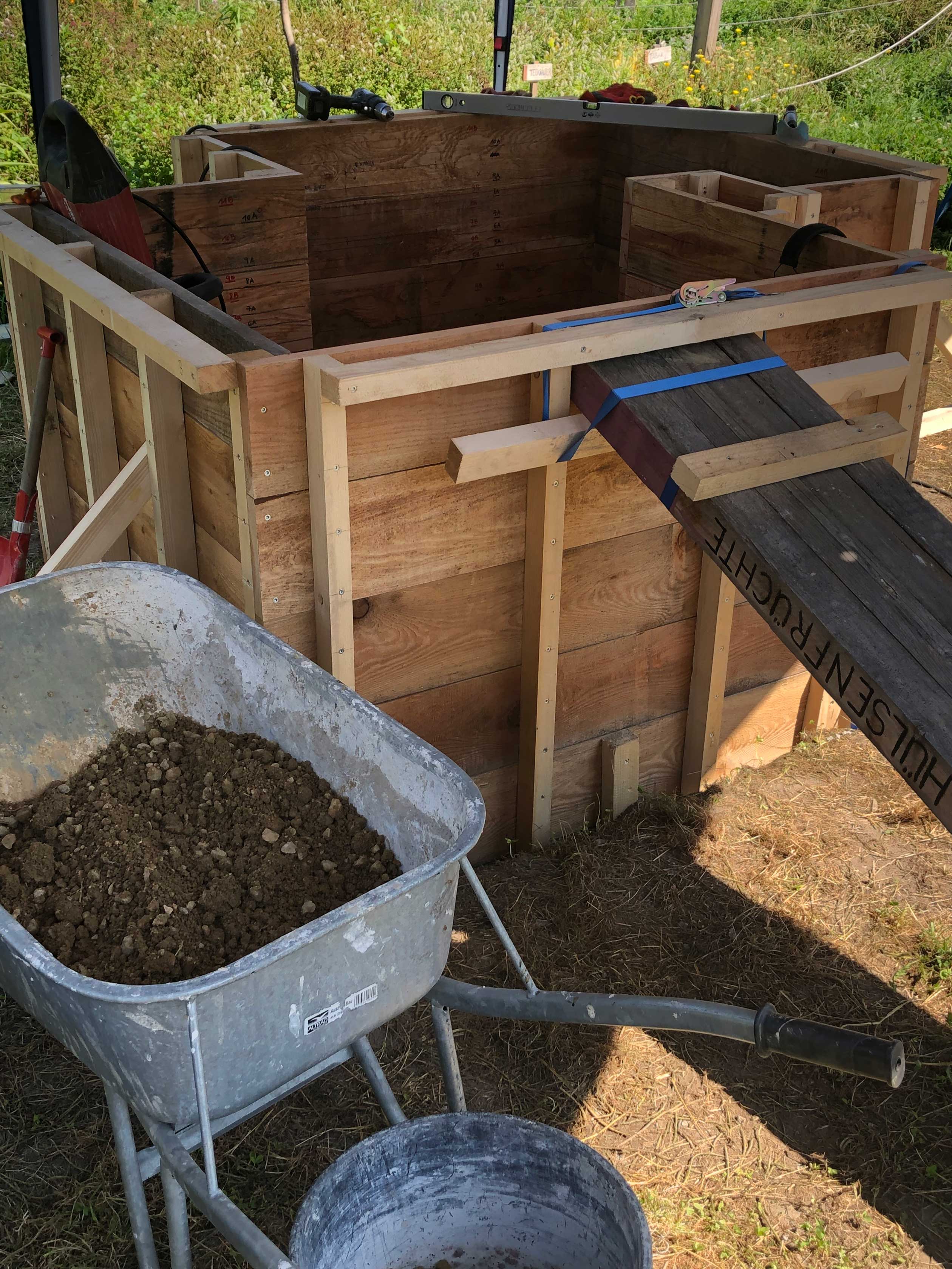
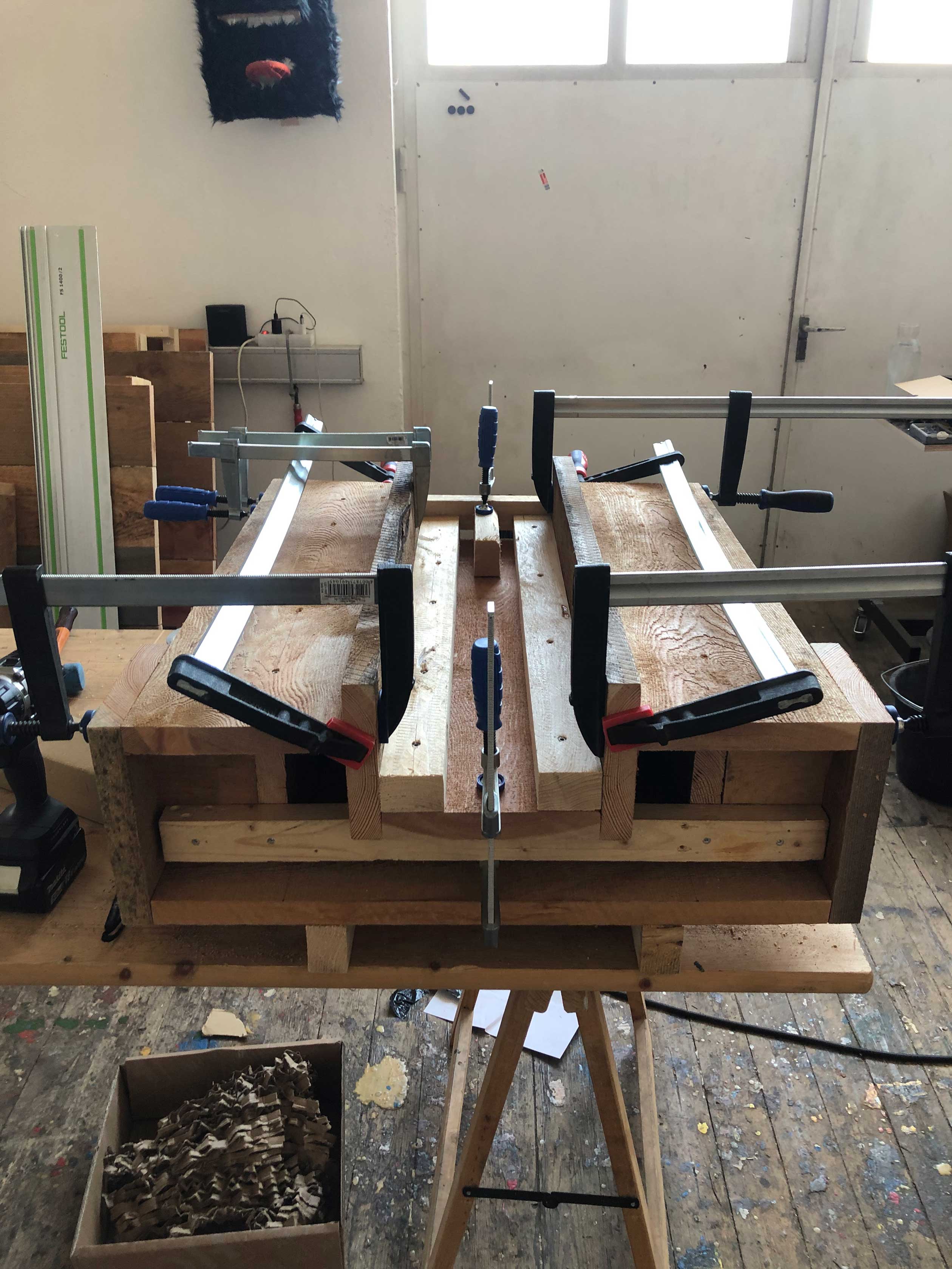
Materiality played a key role: rammed earth was used as both a structural and expressive element, combining ecological considerations with a tactile quality. This method reflects an interest in resource-efficient, reversible, and locally sourced building processes. The project drew on the ideas of Margarete Schütte-Lihotzky, whose work emphasized social responsibility, user orientation, and material awareness. By extending the concept of the scullery into a shared public prototype, the project examined how architectural design can address questions of collective use, sustainability, and everyday social practices.
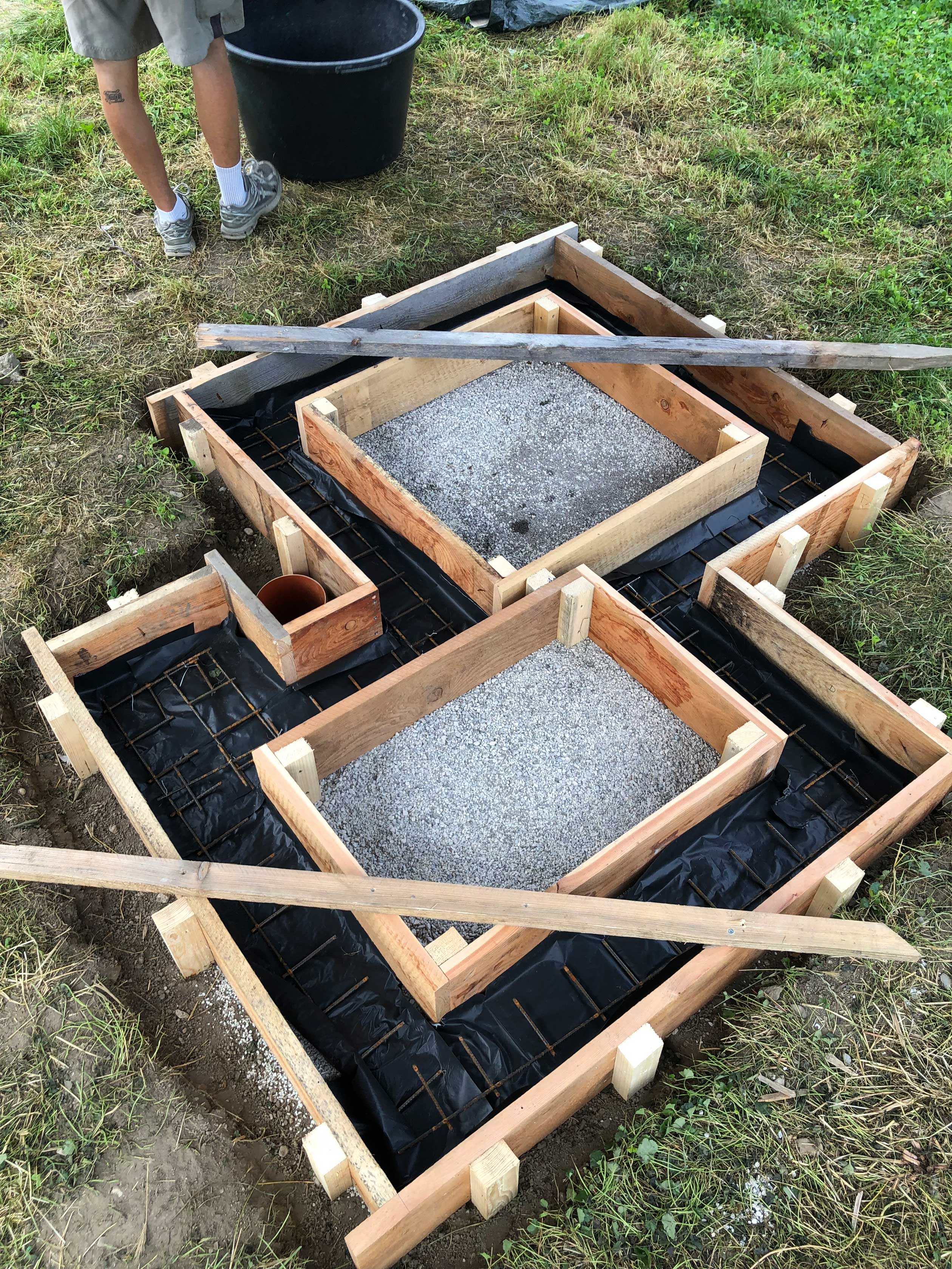
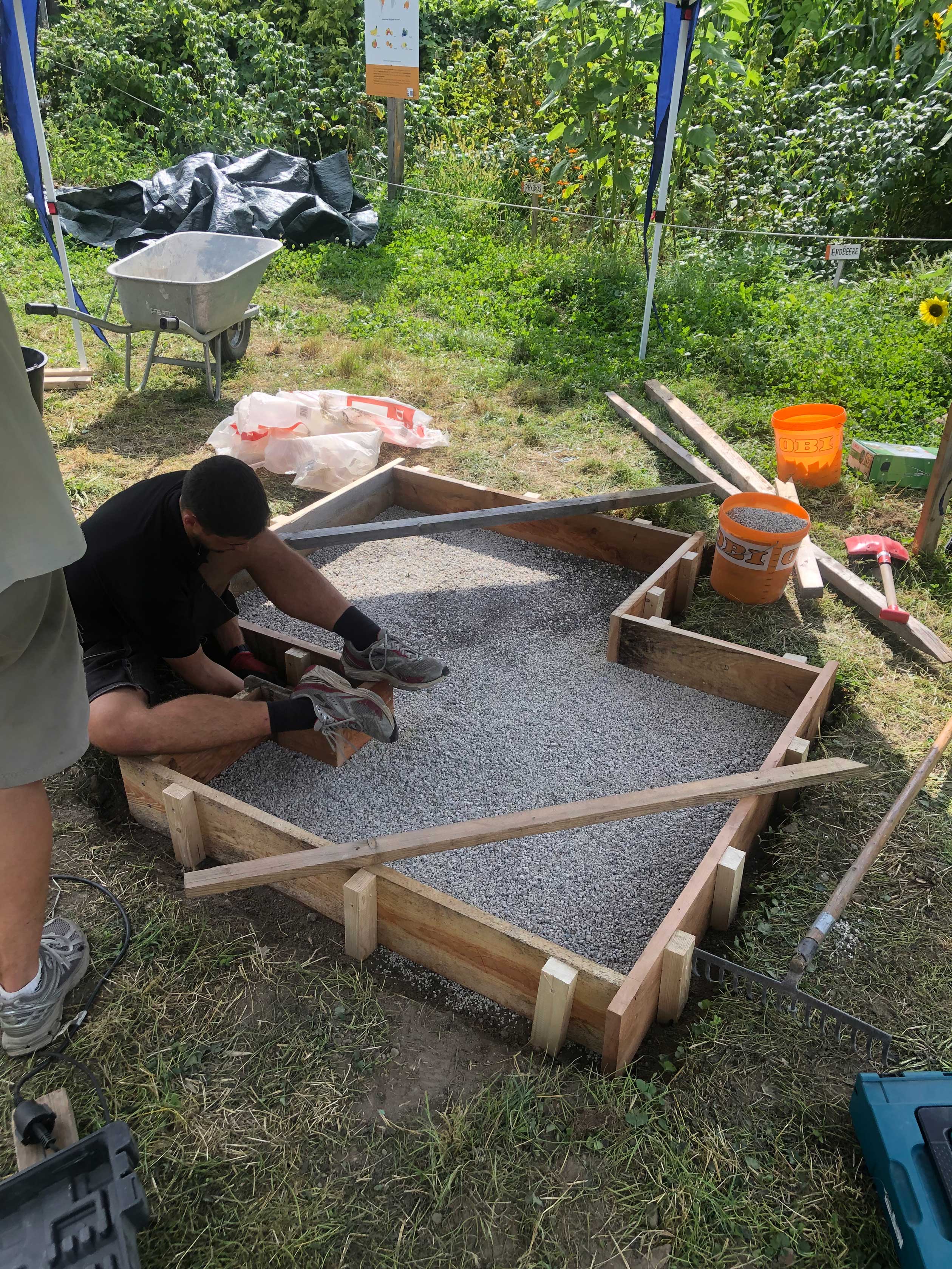
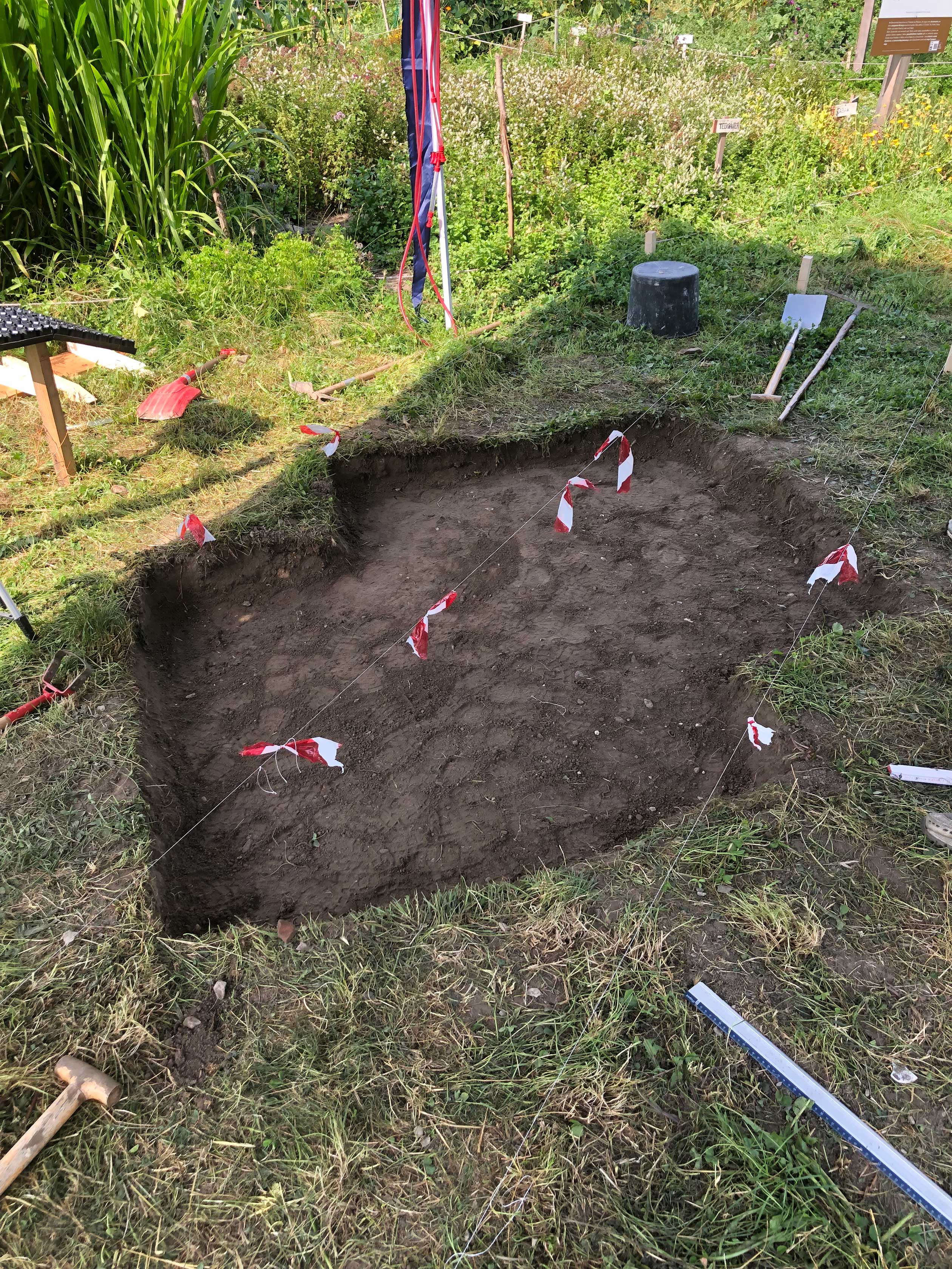
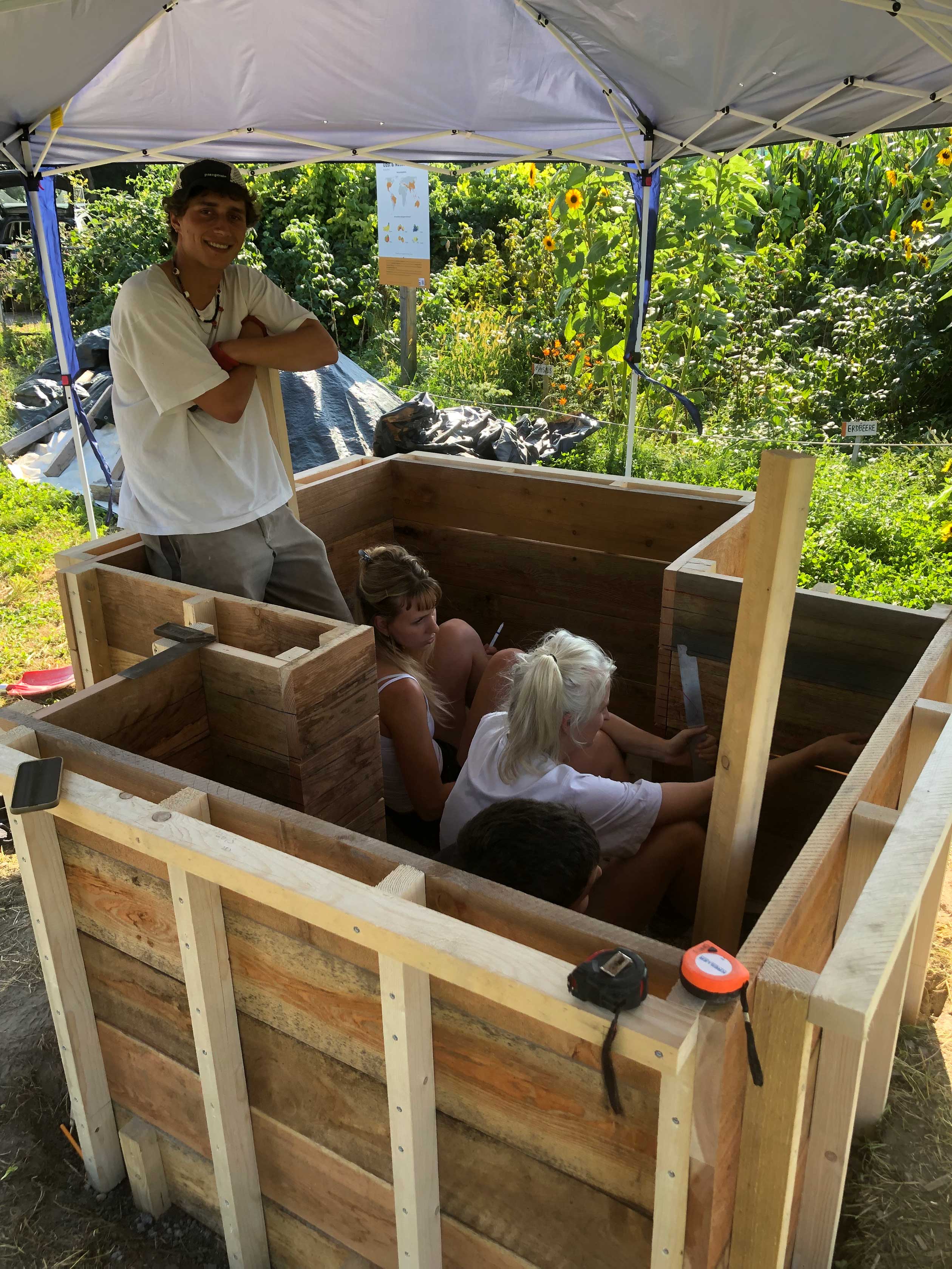
The construction phase itself served as a space for communication, fostering active exchange with the local community. Numerous conversations emerged about the project and related topics. In this way, the initiative gained visibility during its development and gradually became integrated into the social fabric of the neighborhood.
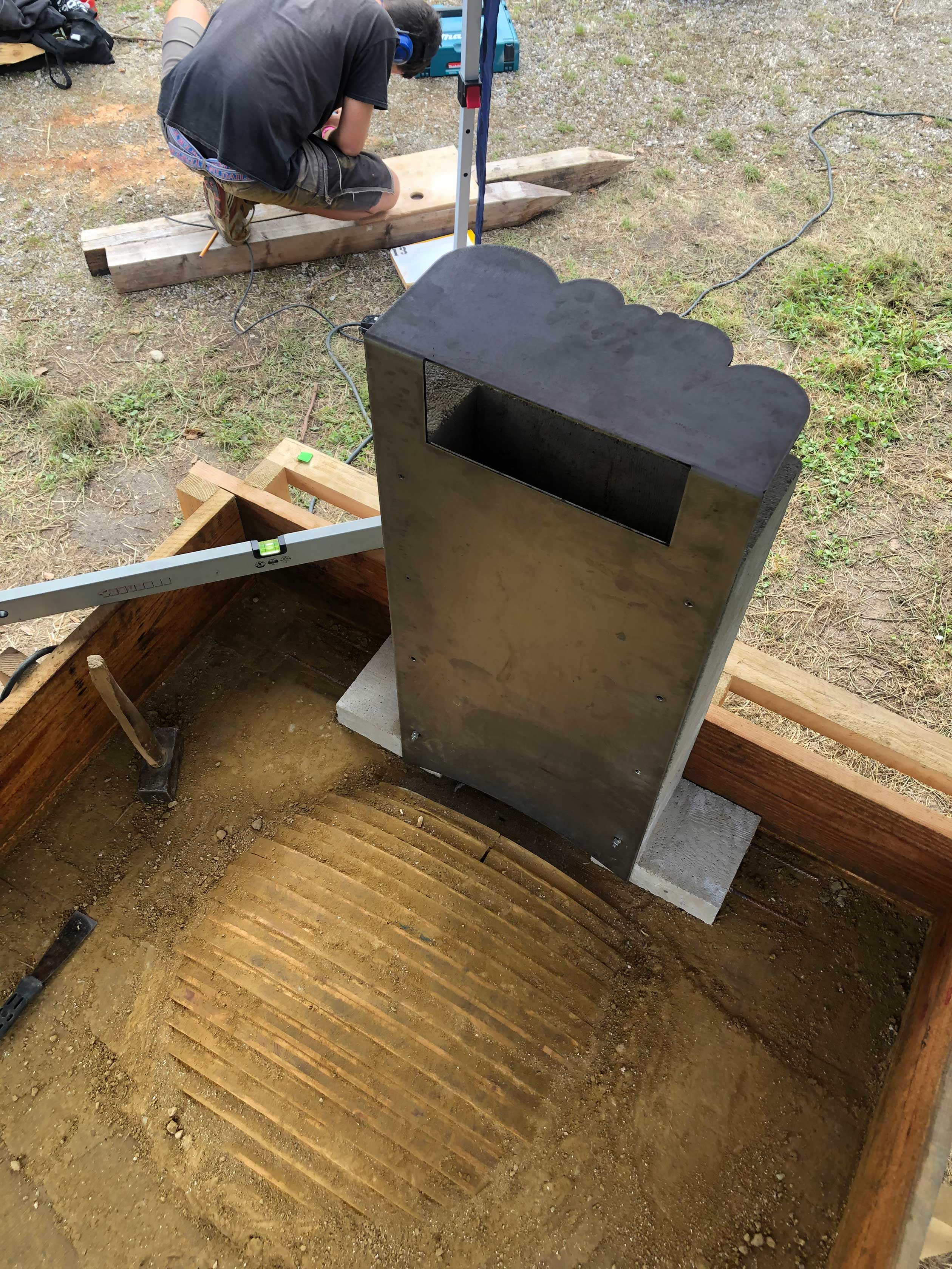
The fireplaces, conceived as cooking facilities, rely on basic physical principles of heat conduction, storage, and air circulation, using minimal technical means to enable shared activity.Gathering around a fire, once a central element of social life, has largely disappeared from the urban environment. The ÖKÜ sought to reintroduce this form of communal experience into public space.